The other night, I had a dream that upset me so much that it stayed with me throughout the day, made me so miserable I didn't go to the village market because I didn't want to put on a fake smile or open my mouth. When I told Rob about it, he said that it did not sound that scary and, in telling it, it didn't but still, I felt horrible.
I appear to be at a beach that has a long boardwalk running through its middle. A long line of people are walking casually along, laughing and talking. I stand off the walk, in my mask, waiting for the people to pass so I can cross safely when I focus on this young woman, taller and stronger than me, approaching. When she reaches me, she stops, looks me in the eye sneeringly and grabs my hands. I am horrified and try to pull my hands out of hers but she holds tight and won't let go. I struggle for what appears to be a long time and finally, realizing that she is too strong, I begin to cry. She laughs and leaves me.
I think about my powerlessness throughout the day, trying to think of what I could have done or said to change the situation. One response could have been: I have COVID19. Another is: You'll be sorry if I die because of you, but I know both responses are weak: I doubt either would have moved her.
Some days, I feel as if I'm in jail and will never escape. Other days, I think this lonely life is good for me: it forces me to stay put and design a way of being that gives me pleasure. I have begun yet again to write my novel. Susan and David are urging me on although yesterday Susan said that she would not live long enough to read it. I said you never know. You may live to be a hundred. When the writing is difficult, I worry that I am spending my last days doing something that is beyond me, that will never be finished.
I have a pile of books on my desk - fiction, non-fiction, and poetry - and I jump from one to another, depending on my mood. I smile at myself. I am doing what I've been doing all my life - trying to find a way to live.
Thursday, June 18, 2020
Monday, June 15, 2020
Bad Habits
I just found this piece that I wrote many years ago and I have no idea if I wrote it for anything specific or not - could have simply been an exercise for my writing group. I'd say I've been a closet writer for years.
BAD HABITS
I am old as old as my friend Maggie was that year before she died. After disease stole her vocal cords, I visited her almost daily and talked non-stop about my writing, the children, Adam’s work, what I was making for dinner, anything and everything to keep her from crying, although I was the one that minded the tears. Maggie called them the wine of the gods.
Now I am the old one and Marietta visits me as I once visited Maggie but, unlike Maggie, I am blessed. All my faculties more or less function, though my eyes strain more often and my ears miss light sounds like the footsteps of Marietta entering my den. Sometimes, when I am reading with a magnifying glass, I look up and there she is, sitting at the table leafing through one of my novels with such reverence that I smile. I took a lot of abuse over my books, especially Three Hundred Days of Indulgence. Some called it pornography. Others worse. I nearly lost my husband over that one. Adam didn’t like what he said I’d written about him. I laughed in his face; called him presumptuous, and insisted the book was fiction.
I lied, of course. Every writer borrows from life.
He accepted my explanation. Had little choice. After thirty years, I was his bad habit. He couldn’t live without me.
Marietta says my books give her permission to think her wayward thoughts. She is speaking about sex, of course. You’d think in this decade that fucking would be as easy as sending an email. It isn’t. It still confuses people. They can’t get naked and have a rip-roaring good time without using that dreadful word relationship, or worse still love.
“All you need is love, love. Love is all you need.”
I can’t believe it. I sit here thinking my foolish thoughts and when the word “love” pops into my mind, the Beatles’ song plays in my head.
No.
The music is coming from outside.
I look out the window and there’s Adam singing his fool head off in his beloved vegetable garden. It’s eerie how often we’re in sync these days.
I wave and grin; and he, poor dear, blows a kiss my way.
I am a hard cruel woman. I should have set him free years ago. He is too good for me.
I turn back to my desk and there is Marietta sitting patiently waiting. She demands nothing but a word now and again, although occasionally she taxes me for advice on some article she’s writing.
Something has upset her today. She keeps clenching that pretty mouth of hers.
“What is it, Marietta?”
She takes a deep breath, twists one bare leg around the other as if it were rubber.
“You know Sophia…
She takes another deep breath.
“I thought myself liberated. I come here and tell you about my sexual exploits, brag almost, feel free and intelligent—gutsy, to use your word; but after what I did yesterday…
She hangs her head like a sorry child.
“Oh come on, Marietta. I’m too old to plead. What stupid fool thing did you do? Or think you did?”
She gets up and paces, her long legs more exposed, as she strides, in that treacherous mini-skirt.
Just when I’m about to yell at her for wearing out the carpet and my patience, she halts and begins in a somber voice.
“A couple of nights ago, I went to The King’s Arms with several colleagues from the office. It was Malcolm’s birthday. He’s the skinny one with dark glasses who fawns over me. After a couple of glasses of wine, I excused myself to go to the washroom. The new illustrator—beautiful young woman, smart too, but with the craziest eyes I’ve ever seen—said she had to go too. I went into the first stall, was about to lock the door, when she pushed in, bolted it, and spun round to face me.”
Marietta swallows hard and resumes pacing.
“As I looked into those crazy eyes, questioning, she raised her hand and stroked my cheek. And then she raised the other hand to my face and pressed her lips against mine. Those soft wet lips and tongue forcing its way into my mouth took me by surprise. I liked the sweetness. I closed my eyes and tasted fruit.”
She pauses.
“It’s been too damn long, Sophia, that’s the problem. I like penises. I like them inside me. I’m not attracted to women. Oh yes, I have fantasies, but that’s all they are. I love women but I don’t want to make love to them... fuck them, as you would say.”
“So what’s the big deal? You kissed a woman on the lips.”
“That’s not all. She put her hands on my breasts and I found myself arching towards her. Heaven knows what else I’d have let her touch but we were interrupted by a yell outside the door. I cringe when I think of it.”
Marietta stands there rocking but, by now, I’m as curious as hell and can’t wait for her histrionics to end.
“Yell? Why was someone yelling in the washroom? Was someone hurt?”
“No, no. She was demanding to know what we two lezzies were doing in there.
“Lezzies? I felt as if I’d been slapped. I stepped back and shook my head at crazy eyes. She moved to the wall and I opened the door and left.
“Yesterday she approached me at work and asked if she could come over to my place with a bottle of her favourite merlot.
“No,” I told her. “I’m sorry but no.
“I could hardly look her in the eye. I espouse all this—this dogma on androgyny and find I’m too uptight to test the theory. You told me once that your only regret is that you’ve never made love to a woman. I thought yes, that it would be nice to feel soft flesh next to mine. We would know how to please the other. But, when given the opportunity, I’m too afraid to wander from the straight and narrow.”
She slumps into the chair.
“Balls, Marietta. Think woman think. Imagine that illustrator was a man who could fill you to the hilt. Would you invite him over to your place after one quick grope in a toilet stall?”
Marietta looks up. Slowly her mouth breaks into a smile.
This is why I love this young woman. She can laugh at herself.
“You’re right. I am overreacting. I wouldn’t make love—fuck rather—a man on the basis of one wine-infused kiss, no matter where it happened.
“Sophia, thanks. I feel so much better. Must run.”
Marietta leaves, slamming the damn door. How many times have I told her that it isn’t music to my ears?
She’ll learn some day that the intellect is light years ahead of the emotions. If the timing is right, she might even enjoy a woman in the sack.
Oh Maggie, how I miss you. In the end, you were angry with me. I wanted to leave Adam during my three hundred days of indulgence. He was so dreary. And you cautioned me, crying all the while, not to make important decisions when swinging off emotional highs.
Damn, I was wilder than Marietta. When did I tell her that I’d never made love to a woman? I did whatever I pleased with whomever I pleased—monogamy equaled monotony—and then vindicated myself by telling Adam everything. Before long, he was crying too. I thought I was going to drown in tears.
Who told you that they’re the wine of the gods? I searched long and hard and found no such reference although Psyche crying buckets of tears over Eros pissed me off.
Why is Psyche or Soul a weak little female and Eros, god of love, a golden-haired boy with a bow and arrow?
A man must have transcribed the myth.
If anyone’s been wounded by love, it is Adam. He was Psyche crying for me, goddess of love—or so I thought—looking down from my lofty height, feeling sorry for the mere mortal.
I was so full of myself.
When Adam’s tears dried, he made love to me until I had to beg him to stop—another reversal of roles. Did I say, “made love?” Marietta’s influence… whatever… he knew how to please me. Still does, if the truth is to be told. I love it when that old man climbs on top of me.
I am blessed.
BAD HABITS
I am old as old as my friend Maggie was that year before she died. After disease stole her vocal cords, I visited her almost daily and talked non-stop about my writing, the children, Adam’s work, what I was making for dinner, anything and everything to keep her from crying, although I was the one that minded the tears. Maggie called them the wine of the gods.
Now I am the old one and Marietta visits me as I once visited Maggie but, unlike Maggie, I am blessed. All my faculties more or less function, though my eyes strain more often and my ears miss light sounds like the footsteps of Marietta entering my den. Sometimes, when I am reading with a magnifying glass, I look up and there she is, sitting at the table leafing through one of my novels with such reverence that I smile. I took a lot of abuse over my books, especially Three Hundred Days of Indulgence. Some called it pornography. Others worse. I nearly lost my husband over that one. Adam didn’t like what he said I’d written about him. I laughed in his face; called him presumptuous, and insisted the book was fiction.
I lied, of course. Every writer borrows from life.
He accepted my explanation. Had little choice. After thirty years, I was his bad habit. He couldn’t live without me.
Marietta says my books give her permission to think her wayward thoughts. She is speaking about sex, of course. You’d think in this decade that fucking would be as easy as sending an email. It isn’t. It still confuses people. They can’t get naked and have a rip-roaring good time without using that dreadful word relationship, or worse still love.
“All you need is love, love. Love is all you need.”
I can’t believe it. I sit here thinking my foolish thoughts and when the word “love” pops into my mind, the Beatles’ song plays in my head.
No.
The music is coming from outside.
I look out the window and there’s Adam singing his fool head off in his beloved vegetable garden. It’s eerie how often we’re in sync these days.
I wave and grin; and he, poor dear, blows a kiss my way.
I am a hard cruel woman. I should have set him free years ago. He is too good for me.
I turn back to my desk and there is Marietta sitting patiently waiting. She demands nothing but a word now and again, although occasionally she taxes me for advice on some article she’s writing.
Something has upset her today. She keeps clenching that pretty mouth of hers.
“What is it, Marietta?”
She takes a deep breath, twists one bare leg around the other as if it were rubber.
“You know Sophia…
She takes another deep breath.
“I thought myself liberated. I come here and tell you about my sexual exploits, brag almost, feel free and intelligent—gutsy, to use your word; but after what I did yesterday…
She hangs her head like a sorry child.
“Oh come on, Marietta. I’m too old to plead. What stupid fool thing did you do? Or think you did?”
She gets up and paces, her long legs more exposed, as she strides, in that treacherous mini-skirt.
Just when I’m about to yell at her for wearing out the carpet and my patience, she halts and begins in a somber voice.
“A couple of nights ago, I went to The King’s Arms with several colleagues from the office. It was Malcolm’s birthday. He’s the skinny one with dark glasses who fawns over me. After a couple of glasses of wine, I excused myself to go to the washroom. The new illustrator—beautiful young woman, smart too, but with the craziest eyes I’ve ever seen—said she had to go too. I went into the first stall, was about to lock the door, when she pushed in, bolted it, and spun round to face me.”
Marietta swallows hard and resumes pacing.
“As I looked into those crazy eyes, questioning, she raised her hand and stroked my cheek. And then she raised the other hand to my face and pressed her lips against mine. Those soft wet lips and tongue forcing its way into my mouth took me by surprise. I liked the sweetness. I closed my eyes and tasted fruit.”
She pauses.
“It’s been too damn long, Sophia, that’s the problem. I like penises. I like them inside me. I’m not attracted to women. Oh yes, I have fantasies, but that’s all they are. I love women but I don’t want to make love to them... fuck them, as you would say.”
“So what’s the big deal? You kissed a woman on the lips.”
“That’s not all. She put her hands on my breasts and I found myself arching towards her. Heaven knows what else I’d have let her touch but we were interrupted by a yell outside the door. I cringe when I think of it.”
Marietta stands there rocking but, by now, I’m as curious as hell and can’t wait for her histrionics to end.
“Yell? Why was someone yelling in the washroom? Was someone hurt?”
“No, no. She was demanding to know what we two lezzies were doing in there.
“Lezzies? I felt as if I’d been slapped. I stepped back and shook my head at crazy eyes. She moved to the wall and I opened the door and left.
“Yesterday she approached me at work and asked if she could come over to my place with a bottle of her favourite merlot.
“No,” I told her. “I’m sorry but no.
“I could hardly look her in the eye. I espouse all this—this dogma on androgyny and find I’m too uptight to test the theory. You told me once that your only regret is that you’ve never made love to a woman. I thought yes, that it would be nice to feel soft flesh next to mine. We would know how to please the other. But, when given the opportunity, I’m too afraid to wander from the straight and narrow.”
She slumps into the chair.
“Balls, Marietta. Think woman think. Imagine that illustrator was a man who could fill you to the hilt. Would you invite him over to your place after one quick grope in a toilet stall?”
Marietta looks up. Slowly her mouth breaks into a smile.
This is why I love this young woman. She can laugh at herself.
“You’re right. I am overreacting. I wouldn’t make love—fuck rather—a man on the basis of one wine-infused kiss, no matter where it happened.
“Sophia, thanks. I feel so much better. Must run.”
Marietta leaves, slamming the damn door. How many times have I told her that it isn’t music to my ears?
She’ll learn some day that the intellect is light years ahead of the emotions. If the timing is right, she might even enjoy a woman in the sack.
Oh Maggie, how I miss you. In the end, you were angry with me. I wanted to leave Adam during my three hundred days of indulgence. He was so dreary. And you cautioned me, crying all the while, not to make important decisions when swinging off emotional highs.
Damn, I was wilder than Marietta. When did I tell her that I’d never made love to a woman? I did whatever I pleased with whomever I pleased—monogamy equaled monotony—and then vindicated myself by telling Adam everything. Before long, he was crying too. I thought I was going to drown in tears.
Who told you that they’re the wine of the gods? I searched long and hard and found no such reference although Psyche crying buckets of tears over Eros pissed me off.
Why is Psyche or Soul a weak little female and Eros, god of love, a golden-haired boy with a bow and arrow?
A man must have transcribed the myth.
If anyone’s been wounded by love, it is Adam. He was Psyche crying for me, goddess of love—or so I thought—looking down from my lofty height, feeling sorry for the mere mortal.
I was so full of myself.
When Adam’s tears dried, he made love to me until I had to beg him to stop—another reversal of roles. Did I say, “made love?” Marietta’s influence… whatever… he knew how to please me. Still does, if the truth is to be told. I love it when that old man climbs on top of me.
I am blessed.
Sunday, June 07, 2020
Mother - written May 13, 2012
It's Mother's Day in France and this morning, going through old journals, I found this entry from eight years ago - another Mother's Day.
"What does it mean 'mother'"?
I spent one university year writing a paper on my mother. I cried uncontrollably during the process as if every thought and happening I discussed on paper was a betrayal. When I began researching mothers and daughters, I didn't like my mother. By the end, I loved her.
I began my essay: "I continued to reflect that she was dangerous...she prevented me from liking myself. I, who was so naturally meant for happiness and gaiety, had been forced into a world of self-criticism and guilty conscience..." - Françoise Sagan
"In 1993, Rob was nominated for an Oscar for Unforgiven. After it was announced, the two of us escaped to Mexico, leaving a male friend to look after our children. (As it turned out, he became a secretary as well - recording all incoming messages regarding Rob's nomination.) In Mexico - I cannot remember where - we told nobody about Rob's great honour - although we were bursting with it - and did a number of touristy things. One day, at the last moment, we decided to splurge on a day's boat excursion with what we thought was a reputable company - Jacques Cousteau's. Unbeknownst to us, there was a storm warning and the company bearing Cousteau's name was not at the dock and another had taken its place. We were surprised at the rather shabby sail boat with a rough-looking crew though climbed on board with two American couples. As the day wore on, the sea grew wilder and wilder, the waves larger and larger until the six of us were drenched and fearful that we would be tossed overboard so we devised a human chain: the largest person wrapped his arms around the base of the sail and around the person in front - the rest of us sat between the legs of the person behind and held onto the person in front. I was soaked and shivering and thought we were all going to die: I started yelling for my mother. I had never yelled for my mother: she was the last person I thought of when I was in danger and yet, when I thought my end was inevitable, I was yelling for her.
I think of myself as a mother - the most difficult work that I have ever taken on. There were times when the responsibility terrified me. One day I have a great big belly with the shape of a foot roaming its surface and the next, I am holding a tiny human being whose life depends on me. I am still me but I have a new label - mother: this baby clings to me, claws at me, wants all of me, every hour of the day and night. I am consumed. I worry about things that I never worried about before children. I do things that I've never done before - like waiting at street lights: it is imperative that I stay alive for my child. The baby grows and I want to keep him or her safe and at the same time, allow freedom. I do not want to break a child's spirit but I want to tame it a little so he or she will be welcome anywhere. At the same time, I want a life of my own while raising these wild little beings but this proves difficult when someone is always yelling "mummy".
I so wanted to be a good mother and tried to listen and be open when questioned. For instance, "Why can't I go swimming after eating?" And I would research the half-hour or hour wait period rule - that my mother enforced - to find out if it was an urban legion or not. When my/our children were old enough to drink, we got an account with a local taxi company that they or their friends could use, without question, if inebriated. I know I wasn't perfect. I can remember a few times when I failed one of the other or other miserably.
Now all is quiet. My three are grown-ups, gone, leading their own lives. Two of them are older than I was when I had my first child. My baby is a quarter of a century. All three are creative, loving people. I can relax: they don't need me to keep them safe and yet if they need me, I am here.
How strange life is. One day the child is so dependent; the next, he or she is anxious to leave, to do whatever without censure including guilty pleasures. I know what is right for me, what feels good and, at one time, I knew what was right for my children. Sometimes, I disappointed them, stopped them from doing things they wanted - not because they were necessarily unsafe - but I worried they might be- and I if something horrible did happen, it would be my fault.
Now, I don't know what is right for them. They are on their own and only they know their own hearts. I might not like what they are doing - though this is rare - and sometimes, I would love to offer advice after all, I have lived so much longer than they have - but I don't because for better or worse, I have found my way but is it the best way? I don't know. I have hopes that my children will find a better way - or a way more gratifying to their individual sensibilities."
You won't hear much from me in the days to come because I am trying to finish my novel. I write from two to five hours a day, six days a week. I think the greatest betrayal is self-betrayal - denying myself something that I need, want, desire if it is within my means and if it doesn't cause another harm. (This raises so many questions but I wish to keep somethings to myself.)
As this is my final act, I want to feel my life is valuable to me - beyond my relationship to others, even beyond the roles that I chose to play though I do not regret being a mother and wife, daughter, sister, friend. (This last sentence makes me smile. Too weak. I loved being a wife and mother et al - not all the time but for great chunks of my life.) Recently, I have joyfully accepted the role of Lola and grandmother - the easiest and most fun one that I have ever played.
"What does it mean 'mother'"?
I spent one university year writing a paper on my mother. I cried uncontrollably during the process as if every thought and happening I discussed on paper was a betrayal. When I began researching mothers and daughters, I didn't like my mother. By the end, I loved her.
I began my essay: "I continued to reflect that she was dangerous...she prevented me from liking myself. I, who was so naturally meant for happiness and gaiety, had been forced into a world of self-criticism and guilty conscience..." - Françoise Sagan
"In 1993, Rob was nominated for an Oscar for Unforgiven. After it was announced, the two of us escaped to Mexico, leaving a male friend to look after our children. (As it turned out, he became a secretary as well - recording all incoming messages regarding Rob's nomination.) In Mexico - I cannot remember where - we told nobody about Rob's great honour - although we were bursting with it - and did a number of touristy things. One day, at the last moment, we decided to splurge on a day's boat excursion with what we thought was a reputable company - Jacques Cousteau's. Unbeknownst to us, there was a storm warning and the company bearing Cousteau's name was not at the dock and another had taken its place. We were surprised at the rather shabby sail boat with a rough-looking crew though climbed on board with two American couples. As the day wore on, the sea grew wilder and wilder, the waves larger and larger until the six of us were drenched and fearful that we would be tossed overboard so we devised a human chain: the largest person wrapped his arms around the base of the sail and around the person in front - the rest of us sat between the legs of the person behind and held onto the person in front. I was soaked and shivering and thought we were all going to die: I started yelling for my mother. I had never yelled for my mother: she was the last person I thought of when I was in danger and yet, when I thought my end was inevitable, I was yelling for her.
I think of myself as a mother - the most difficult work that I have ever taken on. There were times when the responsibility terrified me. One day I have a great big belly with the shape of a foot roaming its surface and the next, I am holding a tiny human being whose life depends on me. I am still me but I have a new label - mother: this baby clings to me, claws at me, wants all of me, every hour of the day and night. I am consumed. I worry about things that I never worried about before children. I do things that I've never done before - like waiting at street lights: it is imperative that I stay alive for my child. The baby grows and I want to keep him or her safe and at the same time, allow freedom. I do not want to break a child's spirit but I want to tame it a little so he or she will be welcome anywhere. At the same time, I want a life of my own while raising these wild little beings but this proves difficult when someone is always yelling "mummy".
I so wanted to be a good mother and tried to listen and be open when questioned. For instance, "Why can't I go swimming after eating?" And I would research the half-hour or hour wait period rule - that my mother enforced - to find out if it was an urban legion or not. When my/our children were old enough to drink, we got an account with a local taxi company that they or their friends could use, without question, if inebriated. I know I wasn't perfect. I can remember a few times when I failed one of the other or other miserably.
Now all is quiet. My three are grown-ups, gone, leading their own lives. Two of them are older than I was when I had my first child. My baby is a quarter of a century. All three are creative, loving people. I can relax: they don't need me to keep them safe and yet if they need me, I am here.
How strange life is. One day the child is so dependent; the next, he or she is anxious to leave, to do whatever without censure including guilty pleasures. I know what is right for me, what feels good and, at one time, I knew what was right for my children. Sometimes, I disappointed them, stopped them from doing things they wanted - not because they were necessarily unsafe - but I worried they might be- and I if something horrible did happen, it would be my fault.
Now, I don't know what is right for them. They are on their own and only they know their own hearts. I might not like what they are doing - though this is rare - and sometimes, I would love to offer advice after all, I have lived so much longer than they have - but I don't because for better or worse, I have found my way but is it the best way? I don't know. I have hopes that my children will find a better way - or a way more gratifying to their individual sensibilities."
You won't hear much from me in the days to come because I am trying to finish my novel. I write from two to five hours a day, six days a week. I think the greatest betrayal is self-betrayal - denying myself something that I need, want, desire if it is within my means and if it doesn't cause another harm. (This raises so many questions but I wish to keep somethings to myself.)
As this is my final act, I want to feel my life is valuable to me - beyond my relationship to others, even beyond the roles that I chose to play though I do not regret being a mother and wife, daughter, sister, friend. (This last sentence makes me smile. Too weak. I loved being a wife and mother et al - not all the time but for great chunks of my life.) Recently, I have joyfully accepted the role of Lola and grandmother - the easiest and most fun one that I have ever played.
Monday, May 25, 2020
Anything Goes
I have been busy. I've been editing Gill's new book "Babe Gains" for women of all shapes and sizes. I imagine it is difficult for some women to believe that she believes every body is beautiful because she is gorgeous (though as insecure as the rest of us).
I have also spent a good few hours writing an advertisement for the store - sort of tricky because who wants to buy luxury when under house arrest (not quite true but nearly). Although I included it before, I am removing it from this post as I had to rewrite it (as several people at the store did not think it optimistic enough.)
Please forgive me if I repeat myself but I don't want to take the time to check back on past posts. I used to spend hours writing a blog but no longer. There is not enough hours in the day to do what I want to do so I'm treating this venue as a letter to friends who will understand and love me anyway. Seriously, I just want to have fun. And please stop reading if a post bores you. It's just me putting out all and sundry for selfish reasons - to write and find my voice again. (And yes, my courage.)
I received the most wonderful gift - a year's subscription to MasterClass where I can learn a number of skills from the masters of those particular fields. (This eats into my day too but a class is around 10 to 20 minutes and they are fun.) For a number of days, I've been joining Margaret Atwood in her Creative Writing Class. She appears a little nervous facing the camera. At first, I found her dry but the more classes I take, the more I find her endearing. I have gone back and listened to her class on POV several times.
POV is a big trouble maker for me. When I came out of hiding and took the first 17 pages of my novel to Dublin to my first ever writing workshop, I was terrified. The professor running the program announced at the first get-together that my work would be critiqued first. I was beyond scared. What if my fellow writers tore it to shreds? I might never write again. This reminds me of an audition for a high school musical. I tried out for the lead female singer and, of course, didn't get it as I cannot carry a tune. What if similarly I am told I cannot write?
I dragged myself to the first day of workshopping, thinking my heart might fly out of my chest and burst, it was racing so quickly. I found a chair at the round table and sat, head down as I didn't dare look anyone in the eye. Although my story was written in 3rd person, I was certain that everyone in that room knew it was about me
The professor (JMcC) welcomed us and asked what is the first thing that one asks when critiquing someone else's work. Silence. You ask if it is literate. Is Yvonne's story literate? Silence.
I thought I was going to die.
After what seemed to be forever, he answered his own question: Yes. (This gave me some relief.) For the next two hours, each writer in the class, told what they thought of my work - the strong points and the weak ones. The strong out-weighted the weak. I was truly surprised at what some thought of the main character - a repressed Roman Catholic - and how several found all kinds of biblical references. My work had more depth than I had thought. (I didn't tell them that none of the references were intentional, that the main character was me and I was not RC.) After the class, McC asked to have a word with me. He said that he didn't often suggest this but he thought my story would be stronger if written in first person. He also said - something he noted that he seldom did - that he would like me to stay in touch as he wanted to see where I went with the story. I skipped away in a cloud of happiness.
I went home and changed all the "she"s to "I"s but my psyche didn't like it nor did the two male characters of the story. I tried and tried and tried to finish it. Finally I locked it in my filing cabinet, returning once in a while to continue but without success.
Recently when I was sorting through my filing drawers, deciding what to keep and what to shred, I read my original Dublin manuscript. I read over all the summaries that the prof and other writers wrote at the end (except for the prof's, I kept only the final page from the others). I questioned myself, wasn't it worth one more try?
Every morning I have been reading Elizabeth Gilbert's "Big Magic" and I'm loving it. Gilbert doesn't much hold with the long suffering artist. She writes that creative work should be fun, a delight - the subject matter can be serious - but still the hours working should not be full of angst. Life is too short.
So I have given myself two weeks to see if I can have fun with it or I will force myself to shred every failed attempt, journal, and letter that has anything to do with it. I vowed that I would spend two hours a day doing this. (I've been spending around four.) The first few days were hard going. I paced a lot, thinking that I might as well start shredding.
And then I listened and re-listened to Atwood's POV lecture. She spoke of several of her novels that were written in one person and when she couldn't make it work, she'd switch to another. This idea lingered with me for a day and then it took hold. There is no harm in trying. And really truly what does it matter what person it's in as long as I'm enjoying myself.
The next day, I started switching back from first to third and I smiled. Much easier. But then I hit a snag - a few pages did not want to be converted. I left them and continued. By the next morning, I had a crazy thought: why not just leave them? I can insert them somehow - perhaps in italics - perhaps at the beginning of a chapter. And then I had another irreverent thought - what does it matter? Who am I writing for? I don't even know how to write a novel. I am an avid reader - often of crap - so I must know something.
I have a week left to decide to continue or to shred. I just want to have fun.
Monday, May 11, 2020
Yutori
Yutori has various meanings. It refers to allowance in terms of time and space, to allow the mind to float freely, or drift with the currents of thought.
This morning I awoke with so many ideas to write about that I didn't know where to begin. It's as if I have been stagnant for so long, I will have to run a marathon to catch up with myself.
Why am I being bombarded with ideas at this point in time? Has the pandemic slowed me down, given me time to listen? I am reading Elizabeth Gilbert's "Big Magic" and did watch her TED talk on "Your Elusive Creative Genius" and, if I am to believe her, ideas are creative spirits (independent of a particular person) that float around the universe searching for a home. They land on this poet, writer, artist, or musician seeing if he or she is receptive. If they are not welcomed, they find another.
As proof, Gilbert tells about meeting Ann Pachett at a library meeting and after Pachett spoke, Gilbert was so excited by her words that she went to her and told Pachett she loved her (Gilbert is very effervescent). Pachett looked Gilbert in the eye, paused, and then with both hands holding Gilbert's face said that she loved her too. Their friendship grew through letter writing, sent through the post office not the computer. After several years, they met in person again and spoke of their writing. Gilbert explained that she had started a novel, was interrupted, and when she returned to work on it, found herself no longer inspired so she had to let it go. Ann said she was very excited about her new novel but insisted that Gilbert speak first about the novel she had to let go.
Now here is the curious part. Gilbert told the location of her novel, the plot and described the main characters. Pachett just stared at her until Gilbert asked her to describe her new book. In practically the same words as Gilbert used, Pachett described the same location, plot and characters. It's as if the idea, when it thought Gilbert was taking too long, flew away and gave it to Pachett.
I love this idea of inspiration coming from an outside source. It reminds me of 1990 when I was living in France and I had begun letter writing - potent strong letters - and one day, while I was vacuuming mindlessly, an idea hit me and I stopped the vacuum and grabbed pen and paper and wrote and wrote and wrote a perfect story. I did not pause to think, my hand kept moving wanting to catch every word and every sentence. I felt as if the story was being dictated. A similar thing happened early in my life when I was rehearsing for a dance competition. I remember beginning the dance and then it was over. My teacher and fellow students just stared at me and then applauded madly. I have no idea who was dancing but it wasn't me.
So I believe Gilbert - inspiration comes from something beyond ourselves and we simply have to work and if we are lucky, we'll receive help. Although I'm sad about the years that I haven't written, I cannot say that they've been wasted. I've done a lot of other things and though those things don't include making money, I have lived a rich life. This reminds me of Stella Bowen, an Australian writer or was she a painter? In "Stravinsky's Lunch" Drusilla Modjeska outlines the lives of three Australian artists and in her section about Bowen, she describes how Bowen gave up a lot for love. She was married to Ford Madox Ford whose career took precedence over hers.
I really must read this book again as I have forgotten so much but what I do remember is that Bowen felt that conversation was as important to her life as art. (Oh dear, I must refer to the book as I want to make sure that I am remembering this point correctly. Yes!) In the last two sentences of the section about Bowen, Modjeska writes: If her life teaches us anything, it is that more than one thing matters, and maybe in the end it is the conversations we have - both in love and in art - that will come trailing behind us through those pearly gates. I like to think so.
I have gone off on a tangent: I think I am reassuring myself that's it's alright that I took years off from my writing. I have not missed out on a wealth of conversations. You are fine, I tell myself. It's never too late. I pause here. I learned early that thinking well of oneself is a bad thing. I must be humble. I must not be self-centred. A friend/teacher/mentor questioned this belief: who else can we be centred around if not ourselves? This does not mean we are selfish. It means that we are grounded and in control of our life. If I am a useless piece of nothing, I have no story, nothing of value to impart. I do not believe this.
I am full of roving thoughts. I admire Truitt in her journals - her compilation of roving thoughts become an ode to living and loving and aging. Like her, I would like to make my children lives easier and I try in simple ways but I know in my heart that they will have to face whatever by themselves. They are not me. I am not them. I do not presume that I know better than they simply because I have lived longer. I think of Jung saying something to the effect that a child springs from the parent and lives their unlived life. If this is so, I hope that I have not made life too burdensome for them.
This morning I awoke with so many ideas to write about that I didn't know where to begin. It's as if I have been stagnant for so long, I will have to run a marathon to catch up with myself.
Why am I being bombarded with ideas at this point in time? Has the pandemic slowed me down, given me time to listen? I am reading Elizabeth Gilbert's "Big Magic" and did watch her TED talk on "Your Elusive Creative Genius" and, if I am to believe her, ideas are creative spirits (independent of a particular person) that float around the universe searching for a home. They land on this poet, writer, artist, or musician seeing if he or she is receptive. If they are not welcomed, they find another.
As proof, Gilbert tells about meeting Ann Pachett at a library meeting and after Pachett spoke, Gilbert was so excited by her words that she went to her and told Pachett she loved her (Gilbert is very effervescent). Pachett looked Gilbert in the eye, paused, and then with both hands holding Gilbert's face said that she loved her too. Their friendship grew through letter writing, sent through the post office not the computer. After several years, they met in person again and spoke of their writing. Gilbert explained that she had started a novel, was interrupted, and when she returned to work on it, found herself no longer inspired so she had to let it go. Ann said she was very excited about her new novel but insisted that Gilbert speak first about the novel she had to let go.
Now here is the curious part. Gilbert told the location of her novel, the plot and described the main characters. Pachett just stared at her until Gilbert asked her to describe her new book. In practically the same words as Gilbert used, Pachett described the same location, plot and characters. It's as if the idea, when it thought Gilbert was taking too long, flew away and gave it to Pachett.
I love this idea of inspiration coming from an outside source. It reminds me of 1990 when I was living in France and I had begun letter writing - potent strong letters - and one day, while I was vacuuming mindlessly, an idea hit me and I stopped the vacuum and grabbed pen and paper and wrote and wrote and wrote a perfect story. I did not pause to think, my hand kept moving wanting to catch every word and every sentence. I felt as if the story was being dictated. A similar thing happened early in my life when I was rehearsing for a dance competition. I remember beginning the dance and then it was over. My teacher and fellow students just stared at me and then applauded madly. I have no idea who was dancing but it wasn't me.
So I believe Gilbert - inspiration comes from something beyond ourselves and we simply have to work and if we are lucky, we'll receive help. Although I'm sad about the years that I haven't written, I cannot say that they've been wasted. I've done a lot of other things and though those things don't include making money, I have lived a rich life. This reminds me of Stella Bowen, an Australian writer or was she a painter? In "Stravinsky's Lunch" Drusilla Modjeska outlines the lives of three Australian artists and in her section about Bowen, she describes how Bowen gave up a lot for love. She was married to Ford Madox Ford whose career took precedence over hers.
I really must read this book again as I have forgotten so much but what I do remember is that Bowen felt that conversation was as important to her life as art. (Oh dear, I must refer to the book as I want to make sure that I am remembering this point correctly. Yes!) In the last two sentences of the section about Bowen, Modjeska writes: If her life teaches us anything, it is that more than one thing matters, and maybe in the end it is the conversations we have - both in love and in art - that will come trailing behind us through those pearly gates. I like to think so.
I have gone off on a tangent: I think I am reassuring myself that's it's alright that I took years off from my writing. I have not missed out on a wealth of conversations. You are fine, I tell myself. It's never too late. I pause here. I learned early that thinking well of oneself is a bad thing. I must be humble. I must not be self-centred. A friend/teacher/mentor questioned this belief: who else can we be centred around if not ourselves? This does not mean we are selfish. It means that we are grounded and in control of our life. If I am a useless piece of nothing, I have no story, nothing of value to impart. I do not believe this.
I am full of roving thoughts. I admire Truitt in her journals - her compilation of roving thoughts become an ode to living and loving and aging. Like her, I would like to make my children lives easier and I try in simple ways but I know in my heart that they will have to face whatever by themselves. They are not me. I am not them. I do not presume that I know better than they simply because I have lived longer. I think of Jung saying something to the effect that a child springs from the parent and lives their unlived life. If this is so, I hope that I have not made life too burdensome for them.
Wednesday, May 06, 2020
Do not read me!
I assure you that you do not have to read me. I won't know. At this point, I'm sharing myself for myself - for the purpose of clearing my full files. Too much stuff has not seen the light of day. This "stuff" is most likely boring. It may be out of date. Surely the world must have moved on since I wrote these "ditties" (for lack of a better word)? I fear that I have not and to do so, I have to throw it all out here for better or worse. I will not pussyfoot around anymore. I will not worry about cliches or phrases or words that don't please me. "Out you go, out of my closet, out of my life."
That felt good.
You see I am preparing for death. Hopefully later than sooner but Fanny's dying taught me that it can happen when you least expect it. I want to clear my office so whoever has to get rid of my souvenirs will have an easy job. I also want time to create some new stuff and furthermore, I want to have fun doing it.
This morning, I found "Risking Everything: 110 Poems of Love and Revelation" on our cookbook shelf. I read the first poem and smiled. Someone in the heavens must have known that I need it at this very moment:
That felt good.
You see I am preparing for death. Hopefully later than sooner but Fanny's dying taught me that it can happen when you least expect it. I want to clear my office so whoever has to get rid of my souvenirs will have an easy job. I also want time to create some new stuff and furthermore, I want to have fun doing it.
This morning, I found "Risking Everything: 110 Poems of Love and Revelation" on our cookbook shelf. I read the first poem and smiled. Someone in the heavens must have known that I need it at this very moment:
"When death comes
like the hungry bear in autumn;
when death comes and takes all the bright coins from his purse
like the hungry bear in autumn;
when death comes and takes all the bright coins from his purse
to buy me, and snaps the purse shut;
when death comes
like the measle-pox
when death comes
like the measle-pox
when death comes
like an iceberg between the shoulder blades,
like an iceberg between the shoulder blades,
I want to step through the door full of curiosity, wondering:
what is it going to be like, that cottage of darkness?
what is it going to be like, that cottage of darkness?
And therefore I look upon everything
as a brotherhood and a sisterhood,
and I look upon time as no more than an idea,
and I consider eternity as another possibility,
as a brotherhood and a sisterhood,
and I look upon time as no more than an idea,
and I consider eternity as another possibility,
and I think of each life as a flower, as common
as a field daisy, and as singular,
as a field daisy, and as singular,
and each name a comfortable music in the mouth,
tending, as all music does, toward silence,
tending, as all music does, toward silence,
and each body a lion of courage, and something
precious to the earth.
precious to the earth.
When it's over, I want to say all my life
I was a bride married to amazement.
I was the bridegroom, taking the world into my arms.
I was a bride married to amazement.
I was the bridegroom, taking the world into my arms.
When it's over, I don't want to wonder
if I have made of my life something particular, and real.
if I have made of my life something particular, and real.
I don't want to find myself sighing and frightened,
or full of argument.
or full of argument.
I don't want to end up simply having visited this world."
--Mary Oliver
Past Desire
As I continue to sort through my filing cabinet, I am finding some pretty good stuff that I wrote years ago that has never seen the light of day. I have told few people that I've returned to blogging and I only know two who are keeping up with me. This is a warning: I hope to become more and more outrageous. Once upon a time I said that I wanted to become a writer who wrote what others were afraid to say. I wasn't brave enough or perhaps it was too lofty an ideal. Now that my time is running out, my reticence is pissing me off.
Way back in 1994 I wrote a paper about Mary Meigs and Maxine Hong Kingston and how they were silenced by their mothers. (It was a damn good paper and my professor gave it a high A and said that I should have it published. Did I? No!) I included a quote from Adrienne Rich noting that it has never been easy for women to assert her rights: "If we have come to a point when women can stop being haunted, not only by convention and propriety, but by internalized fears of being and saying themselves, then it is an extraordinary moment for the woman writer - and reader."
I am making excuses for myself. No more!
While going through my files I found "Desire". I wrote this short piece when I was going through my Anais Nin phase and after a friend told me that she was leaving her husband. He no longer desired her. The only sexual pleasure she received was when she pleasured herself. I was embarrassed by her candour. I wrote this for her:
Desire
She desires her husband often. He desires her seldom. Sometimes she thinks his lack of want is because she is no longer firm and ripe like the cantaloupe he eats for breakfast. He tells her this is not so. Men of a certain age have difficulty becoming aroused. It's not lack of erection that bothers her most: it's his lack of wanting her.
She slips off one spaghetti strap of her thin nightgown and exposes a breast. She admires its softness and strokes the nipple until it hardens. She imagines lending him her eyes so he can admire it too. She slips the other strap down, pulls both arms out and lets the gown drop to her feet. She knows if she asked him, if she phrased it affirmatively - "Do you find my breasts beautiful?" - he would say "yes" but she doesn't want to ask. She wants him to tell her, without prompting, that her body pleases him.
She wishes to write a love story, a lust story, describing her body being aroused per her instructions. She would tell him to move slowly, pause often so she could record his moves, her arousal. When he strokes her thighs, nibbles at her rose petals, she would write to the tune of his tongue. Would he allow this or refuse to share her with the page?
Her eyes move down to her soft belly, sunken navel. She caresses the marshmallow surface that expanded beyond belief with each of her children, remembering the dark line running down her middle, dividing it into perfect halves as if to remind her that she shares herself with another.
She looks beyond her belly to the dark forest hiding her petals and private opening, where more often than not, she is the one doing the exploring. She would like to tell him of the treasures to be found there.
At night in the dark, she watches him step out of his clothes, abandoning them at the foot of the bed, climbing into the queen-size bed and tucking the covers around his body, not seeing the woman who is watching, waiting for his embrace. Eventually, she too drifts off to sleep to dream...
I see that this is incomplete. I imagine that I didn't know where to take it but now a little devil in me wants to end it with Erica Jong's "to dream of a zipless fuck".
In retrospect, I think my friend too passive. Too many women wait for men to take the lead. I would like to be (or am I already?) a virgin in the ancient sense of the word, a woman who is one in herself like the woman in Gauguin's Noa Noa who belongs to no man, who seeks pleasure for herself, and does not care what others think of her.
Way back in 1994 I wrote a paper about Mary Meigs and Maxine Hong Kingston and how they were silenced by their mothers. (It was a damn good paper and my professor gave it a high A and said that I should have it published. Did I? No!) I included a quote from Adrienne Rich noting that it has never been easy for women to assert her rights: "If we have come to a point when women can stop being haunted, not only by convention and propriety, but by internalized fears of being and saying themselves, then it is an extraordinary moment for the woman writer - and reader."
I am making excuses for myself. No more!
While going through my files I found "Desire". I wrote this short piece when I was going through my Anais Nin phase and after a friend told me that she was leaving her husband. He no longer desired her. The only sexual pleasure she received was when she pleasured herself. I was embarrassed by her candour. I wrote this for her:
Desire
She desires her husband often. He desires her seldom. Sometimes she thinks his lack of want is because she is no longer firm and ripe like the cantaloupe he eats for breakfast. He tells her this is not so. Men of a certain age have difficulty becoming aroused. It's not lack of erection that bothers her most: it's his lack of wanting her.
She slips off one spaghetti strap of her thin nightgown and exposes a breast. She admires its softness and strokes the nipple until it hardens. She imagines lending him her eyes so he can admire it too. She slips the other strap down, pulls both arms out and lets the gown drop to her feet. She knows if she asked him, if she phrased it affirmatively - "Do you find my breasts beautiful?" - he would say "yes" but she doesn't want to ask. She wants him to tell her, without prompting, that her body pleases him.
She wishes to write a love story, a lust story, describing her body being aroused per her instructions. She would tell him to move slowly, pause often so she could record his moves, her arousal. When he strokes her thighs, nibbles at her rose petals, she would write to the tune of his tongue. Would he allow this or refuse to share her with the page?
Her eyes move down to her soft belly, sunken navel. She caresses the marshmallow surface that expanded beyond belief with each of her children, remembering the dark line running down her middle, dividing it into perfect halves as if to remind her that she shares herself with another.
She looks beyond her belly to the dark forest hiding her petals and private opening, where more often than not, she is the one doing the exploring. She would like to tell him of the treasures to be found there.
At night in the dark, she watches him step out of his clothes, abandoning them at the foot of the bed, climbing into the queen-size bed and tucking the covers around his body, not seeing the woman who is watching, waiting for his embrace. Eventually, she too drifts off to sleep to dream...
I see that this is incomplete. I imagine that I didn't know where to take it but now a little devil in me wants to end it with Erica Jong's "to dream of a zipless fuck".
In retrospect, I think my friend too passive. Too many women wait for men to take the lead. I would like to be (or am I already?) a virgin in the ancient sense of the word, a woman who is one in herself like the woman in Gauguin's Noa Noa who belongs to no man, who seeks pleasure for herself, and does not care what others think of her.
Wife and Whore
I wrote this in 2005 for a creative writing assignment at university. I did send it out to a literary contest but I retitled it and called it "Guilty Pleasures". Stupidly, I sent it in as "Quilty Pleasures". When I noticed my error, I was mortified and doubted the judges read beyond the title. My professor gave "my story" top marks. (I am such an idiot.) (I would so like to change a word here and there but I won't.)
Around six years after I completed my degree in Creative Writing, I went to an event at the university and ran into several writers who had been in the program with me. One asked how my writing was coming along. "It's not," I replied. "Oh no, you are such a good writer. I thought you'd be famous by now!"
I never thought I was good enough.
Around six years after I completed my degree in Creative Writing, I went to an event at the university and ran into several writers who had been in the program with me. One asked how my writing was coming along. "It's not," I replied. "Oh no, you are such a good writer. I thought you'd be famous by now!"
I never thought I was good enough.
Wife and Whore or Guilty Pleasures
The graceless maiden plunked two cups of lukewarm coffee on the plastic tablecloth. She serves my friend and me every other Saturday morning, in the booth by the window, and though we have been coming to the diner for over two years, I have yet to see our multi-pierced waitress smile. Without a word, she slid back to the counter and my friend noted that we hold little interest for the young. By all appearances, we are two middle-aged housewives indulging in the ancient activity that sets social norms.
At first, we did gossip about a fellow journalist who had left her husband for a younger woman but, in the middle of one of my snide remarks, my friend leaned forward and, with an intensity I have seldom seen in her, began firing questions at me.
“Would you as a writer betray a confidence for the sake of a story?”
“No.” I said.
“What if what you are told is not labeled ‘confidential’?”
“I don’t understand.”
“What I’m asking is whether a writer can use, with integrity, all for a story unless the person or people involved specify that what is being said is secret?”
“You mean that anything I say to you now—idle chatter over coffee—might appear in a story?”
“Yes, unless you explicitly tell me that what you are saying is private. Listen. I have to talk this through with someone. Do you remember a couple of years back when I was given a grant to write in Italy?”
“Yes.”
“While I was there, I fell for an Italian writer. He was at his summer home though, soon after, disappeared to his permanent residence in the north. As we couldn’t get together to consummate our passion, we wrote each other long steamy letters. Our affair was, in Henry Miller’s words. “a literary fuck-feast.” His wife knew about the relationship, read our correspondence, and even wrote me herself. When my husband arrived, I told him in detail about my infidelity and the letters. Six months later, we returned to Canada. The Italian and I continued to exchange letters for a while but without next-day-mail-delivery and the opportunity for an occasional fling, our passion died.”
“Why didn’t you tell me about this before?”
“I didn’t want it turned into a sordid little love affair. And for all our liberal discussions, I wasn’t sure how you’d react. Anyway, enough time has passed. I’ve decided to write the story of my fling using my journal entries and our letters.
“My husband is furious. “Don’t make public what should remain private,” he yells. “You’ll destroy me and the family.”
“An understandable reaction,” I muttered.
“There’s more,” she said. “I’m getting static from the other side of the ocean. When I wrote and told my ex-lover about what I was planning to do, he became angrier than my husband. ‘I do not want my letters translated,’ he shot back. ‘I wrote for your eyes only. If your story is published, I’ll write my version. And just for spite, I’ll throw in a photograph or two.’”
“Photographs? Are you out of your mind? Why would you expose yourself and these men to ridicule? They’ll probably hate you.”
She shrugged her shoulders. “I am a writer. Have you read “Portrait of a Marriage” in which Vita Sackville-West describes her affair with Violet Trefusis? No? Within the text, Vita says she needed to tell the ‘entire truth.’ She despised the hypocrisy of her world and hoped, at a latter date, others would understand her ‘type’. After her death, her son found the manuscript in a locked briefcase. He published it because he felt it was ‘among the most moving pieces she ever wrote.’”
“She didn’t publish it herself, did she?” I replied. “She didn’t embarrass her husband, family, and friends.”
“She lacked the guts. I know it wouldn’t have been easy but she should have published. She could have been more influential. There are writers who don’t hide their sexuality. Thanks to them attitudes change.”
“Give me an example.” I said, refusing to let my friend off easy.
“Jane Rule for one. Several years ago, at the Writer’s Festival in Vancouver, she spoke openly about ‘coming out.’ She said she writes about both heterosexual and lesbian love because the two exist. She believes males and females—Timothy Findlay sat beside her—should have the choice to follow their natural bent. One young woman in the audience stood up and thanked her. It was an intensely emotional moment. The woman said that she would never have been able to accept herself if it weren’t for Rule’s writing.”
“Okay,” I said. “That’s one... “
“Erica Jong is another,” my friend snapped. She doesn’t shy away from sex. In her book about Henry Miller, she said...”
My friend paused, opened a notebook, flipped through it and read: “But what use is it to be a writer if one doesn’t take chances? Hating Henry... was about my own fear of self-exposure... without taking chances one cannot tell the truth, and what use is it to be a writer if one doesn’t tell the truth?”
“Truth,” I snorted. “Your truth will likely be sloughed off as yet another female confession. Is it worth it?”
“Yes, damn it, yes. Maxine Hong Kingston, in an interview, spoke about truth.” She paused and flipped once more through her journal. “Kingston said, ‘There’s a lot in society that says, don’t tell this secret, don’t tell that... What you have to tell is not beautiful, or unacceptable, or too crazy... It’s always important to tell the truth because if you don’t there are all kinds of terrible social and psychological consequences.’”
My friend’s voice was shaking. She began talking faster. “People are afraid of the truth. They’re afraid if they show and tell all, they’ll be judged by family or friends or that big man in the sky to be abnormal. What the hell is normal? Can you think of one family that doesn’t own an eccentric or a black sheep? Sometimes it takes several generations to reveal the wayward aunt, the two-timing father, or worse. Then and only then, can they laugh at their relative’s antics. What’s more, they are pleased that one of their own provided a good story.
“Must someone die before we tell the truth? We have to face the facts about family and self now. If we don’t we’ll never be free from neurosis.”
I raised my hand. “Stop.” Needing time to digest all that was being said, I signaled the graceless maiden and ordered another coffee. After she had poured and left, my friend continued.
“If the truth be known, I’m glad that distance freed me from my family’s tight-ass attitude. Mom and Dad would have had heart attacks if they’d known what I was up to in Italy. My affair, even for me, was frightening. But, damn it all, it was also fantastic. For the first time in years, I liked myself. What’s more, I came to know my strengths. Words poured out of me. And, after twenty years of marriage, my husband revealed himself. He was magnificent. When I first told him, he said that if I had done it, it must have been necessary. Now the fool forgets the beauty of the story. He doesn’t see his actions and reactions as indicative of his love and intelligence. He worries what others will think.
“For his sake, I’ve agreed to mask his identity and the Italian’s with different names and nationalities. I’ve agreed to use a pseudonym. Still, both of them are afraid of being recognized. They do whatever they damn well please and then accuse me of being immoral. Like most men, they say they want a wife in the kitchen and a whore in the bedroom, but when I give them what they want, they yell, “Don’t tell. Don’t tell.” Both think that I write for my own amusement at their expense.”
“Hold on,” I interrupted. “In a sense you do write for your own amusement. You’re not completely selfless.”
“Okay, I’ll concede you that point. A good story, even given the hard work, is a pleasure to write and see in print. And this one, with all its wild sex, is sure to find a publisher. Still I’m having a hell of a time getting it down. Some of it is damn painful. These men worry about their precious reputations while I’m bent on destroying mine. Evelyn Conlon, an Irish writer, once said that when a man writes about lust and promiscuity, the reader assumes he is using his imagination; when a woman writes about the same, she is speaking from personal experience.
“Is it a sin to want experience? I feel that I should apologize. Ridiculous. I will not let others dictate what I can or can’t write. I will not let others edit my life. Carolyn Heilbrun says that a woman’s usual fate in literature is marriage or death, the end. I can’t live such fiction. Nor write it. What do I do to my children if I leave them thinking that everything was always rosy in their parents’ marriage? What happens when they discover that their own marriages aren’t fairy tales? Do I really do them a favour keeping my big mouth shut?”
“Perhaps not,” I snapped. “But why advocate infidelity? Do you think every woman should break from convention? Should I go out and find a lover to add heat to my marriage?”
“No, no, no. You sound like my husband. He thinks I’m hot to brag about my ‘little affair.’ He sneeringly asks if I have nothing better to write about. Honestly, I don’t know what is more important than our love relationships. I’m not saying, ‘Do as I do.’ Every story that’s written is not an incitement to action. I describe my pain and pleasure. I didn’t go to Italy looking for an affair. It happened.
“You can’t deny that adultery exists. So why can’t I write about the reality and not some flimsy fantasy like “The Bridges of Madison County?” Or are you one of those people who believe that if you ignore something it will go away? Look around you. In the last few years, how many of our friends’ marriages have fallen apart? Stop judging. That’s not what writing is all about.”
“You’re right, you’re right,” I muttered. “But I was raised in a family where whatever happened between the family’s four walls was private. Once when my parents were having a violent argument, my little sister called the police. While I huddled in a corner shaking with fear, she had the nerve to act. How I admired her. Who knows what would have happened if she hadn’t?”
“I was brought up the same way. ‘If you can’t say something nice about a person, don’t say anything.’ Can’t you see I’m scared shitless? I’m going against the grain. I must. Time is passing. Ever since I was little, I’ve been devouring books. Writers have given me permission to accept my wayward thoughts. They have shown me different ways of looking at the world. I am filled with words. Carl Jung said that we lead small lives if we keep to ourselves. Well, I have this grandiose idea that it’s my turn to give.
“As far as I’m concerned, the greater betrayal is to stop talking, to stop telling the truth. I’m terrified of sending my story out into the world but I’m more terrified not to. I don’t want to become another statistic. Tillie Olsen, in “Silences”, wrote that eleven out of twelve women writers are suppressed before they find their voice. No matter what anyone says, I will tell my story.”
“You have guts, my friend,” I said. “No sense. But you definitely have guts.” I raised my coffee cup and saluted her.
I left my friend mulling over her coffee. I hate to admit it but I envy her her passion. I envy her idealism. As I finish writing out our conversation, I fear that I am betraying her. No. She didn’t specify beforehand that the discussion was confidential.
Friday, May 01, 2020
"Happiness is a butterfly"
I have been doing a lot of thinking lately, and a lot of reading, and if I am to think about this time when I am housebound as a retreat (re Elizabeth Gilbert), I want to retreat, to take the time to sort myself and calm myself down. I am feeling so scattered and lost. Yet I am not unhappy.
I'm reading four books plus my old journals and my head is swimming but I'm catching glimpses of excitement. ... so let me try to make a straight path or slightly curved one and bring myself into focus.
On Facebook, Gilbert copied out a page from an old journal. Her instruction to herself for a free and happy life is simply "No outside validation" and "Gratitude for all things". The whole page is a repeat of these two phrases.
I imagine that if one commits acts of kindness just for oneself and not applause this would make one feel good - an embrace to self. And if one was grateful for everything, including self, (especially self?) that would make you/me happier.
It used to be so easy to be happy.
When I think of my children when they were young and my grandsons now, I see that all were born with an abundant capacity for happiness. And every one is unique with a definite like or dislike for various activities, food, people - and was from day one. We, the adult, listen to the child and watch with fascination at what fascinates him or her. We allow the child full range unless whatever could injure the small precious human being.
Somehow, somewhere most become weighed down with responsibilities, doing what one thinks one should be doing and losing the exuberance and playfulness of the child. I remember Michael telling me about an assignment in school. He was to write about what he valued most and, though I cannot remember the response, he wrote "fun". I was impressed. (Once, in my teens I told my mother that I wanted to have fun and she said, "Yvonne, life is not supposed to be fun.")
In his teens, Michael begged for an Apple computer because he wanted to create animations. He said if he could have this, do this, he'd be the happiest guy in the world. Rob and I bought him his computer.
As far as I know, he no longer creates animation. I imagine him saying that he has to make a living to support his family. He has creative work and extraordinary talent but it is not animation. My question, at this moment, is does he regret not following his youthful dream?
The reason I'm thinking this is because of a friend's request for poetry and I look at my book shelf and alight on Roger Housden's "Ten Poems to Change Your Life" in which he includes "Love after Love" by Derek Walcott.
The time will come
when, with elation
you will greet yourself arriving
at your own door, in your own mirror
and each will smile at the other's welcome,
and say, sit here. Eat.
You will love again the stranger who was your self.
Give wine. Give bread. Give back your heart
to itself, to the stranger who has loved you
all your life, whom you ignored
for another, who knows you by heart.
Take down the love letters from the bookshelf,
the photographs, the desperate notes,
peel your own image from the mirror.
Sit. Feast on your life.
I have read several interpretations of this poem. Huston suggests that Walcott is giving us hope, that at some point in our lives we will - through effort or by chance - recognize the self we were born with in all its uniqueness.
Another review states that Walcott wrote this poem after a relationship failed. "From the outset the suggestion is that the individual will start to acknowledge an inner self," he writes and "What has been a split psyche can become whole again."
For me, it's a kind of permission to listen to my inner self - perhaps to recognize what Housden calls "the particular energetic response to life" that I had from my beginning.
"Happiness is a butterfly, which when pursued, is always just beyond your grasp, but which, if you will sit down quietly, may alight upon you." - Nathaniel Hawthorne
Friday, April 24, 2020
Dances with Words
I am so anxious these days that I have begun writing letters to myself. This calms me a little but today, an hour later, I again get butterflies.
I decide to clean my office as it doesn't please me. (I have already done this twice in the past two weeks.) I begin with a cupboard of odds and ends - a few travel journals, a scrap book, a notebook full of dreams, and several end-of-year journals created by the writing department of UBC. They are thin and only around 15 pieces are included, supposedly the best stories written by students for that calendar year.
I find my name in the index of 1995 and read my short non-fiction article. I am not overwhelmed but this was 25 years ago when I dreamed of becoming a writer. What happened? I don't know. Life got in the way and then as now I expect too much of myself.
So just for the record I'm going to record one of my first attempts at polishing a story. I am tempted to rewrite it but I won't.
Dances with Words
Sometimes when I'm happy, I find myself doing a grand jete across the living room carpet or a soft shoe on the kitchen tile floor. Often, after a drink or two, I can't contain myself and cavort wherever I am. At forty-five, I enjoy dancing in a way I never could in my late teens.
"If it doesn't hurt, you aren't doing it right." I heard this line countless times at York University. As a theatre and dance major, I spent half my days at a wooden barre which ran the circumference of a huge gymnasium. Head held high, chest forward, bottom tucked under, I followed the classical exercises developed to force my body beyond its natural limits. Often after several hours of fighting myself, I would sit in the change room and cry. I was a circus animal being trained to perform unnatural acts to amuse an audience. No, I wasn't. A caged animal didn't have a choice: I was there willingly.
I'd wanted to be a dancer since I was eight years old, living with my family in a Toronto suburb. The Tilley kids lived next door and that summer their aunt, a ballet mistress in New York city, came to visit. She organized, on the small plot of grass in front of their brick bungalow, dance lessons for her nieces and me. After several sessions, she advised my mother to send me to ballet school: I was a born dancer. My mother, a frantic young woman of twenty-eight who was trying her best to raise my three sisters and me, had neither the inclination nor the means to get me to dance classes.
I was inspired to dance again when at fourteen I fell in love with the choreographer of my high school play. His mother ran the town's own dance school. Although my mother was still frantic, she did not object to classes because money was freer and the school was within walking distance. In a shabby basement studio with barres running the length of two walls and an enormous mirror at one end, I pushed my body to perform.
As well as attending classes four days a week, I frequented dance spectacles to observe professional dances in action. By the end of most performances, my muscles ached from tensing and releasing in unison with those on stage. Such was not the case when I saw Martha Graham give one of her last performances. I forgot the mechanics of dance. I forgot the rest of the audience. Nothing registered except the presence of the grand matron of modern dance.
She stood center stage, her tall figure shrouded in brown cloth like a mourner in Giotto's Lamentation. As if painted by the master himself, she confronted the audience without movement. Two achingly long minutes passed. Suddenly her head dropped forward and one arm, out of the folds of fabric shot upward. Her every move throughout the dance told of despair. Like a sorceress, she bewitched the audience.
I did not, even then, aspire to Graham's magic. I simply wanted to master technique and express myself through an art form I love. After struggling for two years at university, I realized that I had neither the body nor the attitude to perform professionally.
I left and joined the Globe and Mail as a copywriter. Years passed. I married, moved to Vancouver, produced three children and finished my undergraduate degree. As I had once expressed myself through dancing, I now express myself through writing. Sometimes when I'm happy, I can't contain myself and words flow effortlessly. More often, I despair: words can never express what Martha Graham could with one simple thrust of her arm to the heavens.
I found this an interesting exercise - to type out my twenty-five year old thoughts. They are so simple. Everything I write is simple and yet if I am to believe my friend Susan, simple writing is difficult.
Speaking of Susan, I found a note from her in my cupboard that she wrote me around thirty years ago:
"O YVONNE, LETS LIVE IN A FOOLS PARADISE. LETS PRAISE FOLLY AND PRACTICE IT. AT LEAST YOU HAVE FORCED ME TO THINK ABOUT - BY YOUR COMPLAINTS - WHAT A BIG THING BEING A FOOL IS - THE BIGGEST THING IN THE WORLD, THE BIGGEST WE CAN ACHIEVE. I WISH I HAD THE COURAGE TO BE A FOOL. AT LEAST YOU HAVE TAUGHT ME WITH ALL THIS CLAMOUR TO SEE CLEARLY THAT THIS IS WHAT I WANT. IT'S ALSO WHAT I RESPECT IN OTHER PEOPLE, REALLY RESPECT. BEING HAPPY AND HAVING THE COURAGE TO BE FOOLS IS VERY MUCH THE SAME THING. LETS BE HAPPY. S"
In four months, Susan turns 94. I wish I had the freedom to run over and talk to her, to remind her of this note but although she is only a block away, I am not allowed to visit and even if I could, I would be afraid that I'd contaminate her. She is so fragile.
Being house-bound is not the worst thing in the world. Not being able to visit those I love drags me down, makes me want to cry.
I decide to clean my office as it doesn't please me. (I have already done this twice in the past two weeks.) I begin with a cupboard of odds and ends - a few travel journals, a scrap book, a notebook full of dreams, and several end-of-year journals created by the writing department of UBC. They are thin and only around 15 pieces are included, supposedly the best stories written by students for that calendar year.
I find my name in the index of 1995 and read my short non-fiction article. I am not overwhelmed but this was 25 years ago when I dreamed of becoming a writer. What happened? I don't know. Life got in the way and then as now I expect too much of myself.
So just for the record I'm going to record one of my first attempts at polishing a story. I am tempted to rewrite it but I won't.
Dances with Words
Sometimes when I'm happy, I find myself doing a grand jete across the living room carpet or a soft shoe on the kitchen tile floor. Often, after a drink or two, I can't contain myself and cavort wherever I am. At forty-five, I enjoy dancing in a way I never could in my late teens.
"If it doesn't hurt, you aren't doing it right." I heard this line countless times at York University. As a theatre and dance major, I spent half my days at a wooden barre which ran the circumference of a huge gymnasium. Head held high, chest forward, bottom tucked under, I followed the classical exercises developed to force my body beyond its natural limits. Often after several hours of fighting myself, I would sit in the change room and cry. I was a circus animal being trained to perform unnatural acts to amuse an audience. No, I wasn't. A caged animal didn't have a choice: I was there willingly.
I'd wanted to be a dancer since I was eight years old, living with my family in a Toronto suburb. The Tilley kids lived next door and that summer their aunt, a ballet mistress in New York city, came to visit. She organized, on the small plot of grass in front of their brick bungalow, dance lessons for her nieces and me. After several sessions, she advised my mother to send me to ballet school: I was a born dancer. My mother, a frantic young woman of twenty-eight who was trying her best to raise my three sisters and me, had neither the inclination nor the means to get me to dance classes.
I was inspired to dance again when at fourteen I fell in love with the choreographer of my high school play. His mother ran the town's own dance school. Although my mother was still frantic, she did not object to classes because money was freer and the school was within walking distance. In a shabby basement studio with barres running the length of two walls and an enormous mirror at one end, I pushed my body to perform.
As well as attending classes four days a week, I frequented dance spectacles to observe professional dances in action. By the end of most performances, my muscles ached from tensing and releasing in unison with those on stage. Such was not the case when I saw Martha Graham give one of her last performances. I forgot the mechanics of dance. I forgot the rest of the audience. Nothing registered except the presence of the grand matron of modern dance.
She stood center stage, her tall figure shrouded in brown cloth like a mourner in Giotto's Lamentation. As if painted by the master himself, she confronted the audience without movement. Two achingly long minutes passed. Suddenly her head dropped forward and one arm, out of the folds of fabric shot upward. Her every move throughout the dance told of despair. Like a sorceress, she bewitched the audience.
I did not, even then, aspire to Graham's magic. I simply wanted to master technique and express myself through an art form I love. After struggling for two years at university, I realized that I had neither the body nor the attitude to perform professionally.
I left and joined the Globe and Mail as a copywriter. Years passed. I married, moved to Vancouver, produced three children and finished my undergraduate degree. As I had once expressed myself through dancing, I now express myself through writing. Sometimes when I'm happy, I can't contain myself and words flow effortlessly. More often, I despair: words can never express what Martha Graham could with one simple thrust of her arm to the heavens.
I found this an interesting exercise - to type out my twenty-five year old thoughts. They are so simple. Everything I write is simple and yet if I am to believe my friend Susan, simple writing is difficult.
Speaking of Susan, I found a note from her in my cupboard that she wrote me around thirty years ago:
"O YVONNE, LETS LIVE IN A FOOLS PARADISE. LETS PRAISE FOLLY AND PRACTICE IT. AT LEAST YOU HAVE FORCED ME TO THINK ABOUT - BY YOUR COMPLAINTS - WHAT A BIG THING BEING A FOOL IS - THE BIGGEST THING IN THE WORLD, THE BIGGEST WE CAN ACHIEVE. I WISH I HAD THE COURAGE TO BE A FOOL. AT LEAST YOU HAVE TAUGHT ME WITH ALL THIS CLAMOUR TO SEE CLEARLY THAT THIS IS WHAT I WANT. IT'S ALSO WHAT I RESPECT IN OTHER PEOPLE, REALLY RESPECT. BEING HAPPY AND HAVING THE COURAGE TO BE FOOLS IS VERY MUCH THE SAME THING. LETS BE HAPPY. S"
In four months, Susan turns 94. I wish I had the freedom to run over and talk to her, to remind her of this note but although she is only a block away, I am not allowed to visit and even if I could, I would be afraid that I'd contaminate her. She is so fragile.
Being house-bound is not the worst thing in the world. Not being able to visit those I love drags me down, makes me want to cry.
Monday, April 13, 2020
APRÈS ANAÏS NIN
Today, I have been cleaning my files, shredding what's unnecessary or duplicated.
Somewhere along the way I've forgotten my love of words and writing. I have been waylaid by my parents' deaths and self-imposed responsibilities and the feeling that I'm losing it.
Among my files, I found a quote by Goethe:
“Until one is committed, there is hesitancy, the chance to draw back, always ineffectiveness. Concerning all acts of initiative (and creation), there is one elementary truth, the ignorance of which kills countless ideas and splendid plans: that the moment one definitely commits oneself, then Providence moves too."
I also came across a file of my writing and found a short prose piece that I had entered into a literary contest and won - second place (but one of the judges said it should have been first).
This short piece rolled from my pen. I imagined that I was Nin having a private conversation with Henry Valentine Miller:
"In a miniscule hotel room in Montmartre, I light candles and incense, sit with pen in hand gazing into space. Have I ever told you, dear Henry, that my fingers are the most sensual part of my body? They love the feel of a fountain pen, nib posed on an expanse of virginal white. When I begin, I write slowly not knowing what to say or where to go. But my fingers know. They move by instinct, without calculation, playing with words, with phrases, even clichés—a kind of foreplay you might say. The quiet strokes of my pen are an aphrodisiac willing me to go on and on, write faster and faster, until I reach the climax. I want my brow to drip, my palms to sweat, my heart to beat faster. Yours too.
The heater hisses. I remove my clothes and imagine myself creating, in your words, a “literary fuck feast”. Read me naked, if you dare. As I explore myself on the page and you me, the juices start flowing. I want to touch you in forbidden places. Part of the pleasure of writing is going where I’m not supposed to go, saying what I’m not supposed to say. I am allowed to be carnal, if I dare. I dare.
With my fingers, I caress the page, a single leaf in the body of a notebook, delighting in its smoothness and the scent of paper and ink. My nipples harden. I spread my legs and expose a Georgia O’Keeffe flower in full bloom. I love the colour of language, the taste of a well-chosen metaphor, and a whiff of indiscretion. I am an adulteress. The page is my lover. It lies before me awaiting my touch, loving the way I play and tease words onto paper. I fill one line and then another, one page and then another, until I am panting and know, without a doubt, that I have found my true love. This is where I belong. This is what I should be doing. I write faster and faster, faster and faster. Where am I going? I don’t care. I am letting go of thought, moving for the sake of movement. I can’t stop myself. I am filled with desire. I want to explode on the page. I want… I want… I want... the climax. My body dissolves.
Later, when I am refreshed, I look at this page and read what I have written and see that I have gone further than I intended to go. “You are good,” I whisper to my love. 'You are so damn good.' I know that tomorrow I will doubt my lust, my words. My husband, my censor, who demands monogamy, will walk in, without knocking, and tear me apart limb by limb, sentence by sentence, word by word. I don’t care at the moment. I am in love."
One of the judges wrote: "This short piece of writing is extremely sensual, particularly the Georgia O'Keefe flower in full bloom. Good metaphor. The comparison with the page (body) of writing to the human body is well done. Then the protagonist's writing, which includes the "colour of language", etc. (and rises to an incredible climax) leaves everyone (reader and writer) satisfied and in love.
I liked this very much. Congratulations."
I was so proud of myself.
Somewhere along the way I've forgotten my love of words and writing. I have been waylaid by my parents' deaths and self-imposed responsibilities and the feeling that I'm losing it.
Among my files, I found a quote by Goethe:
“Until one is committed, there is hesitancy, the chance to draw back, always ineffectiveness. Concerning all acts of initiative (and creation), there is one elementary truth, the ignorance of which kills countless ideas and splendid plans: that the moment one definitely commits oneself, then Providence moves too."
I also came across a file of my writing and found a short prose piece that I had entered into a literary contest and won - second place (but one of the judges said it should have been first).
This short piece rolled from my pen. I imagined that I was Nin having a private conversation with Henry Valentine Miller:
"In a miniscule hotel room in Montmartre, I light candles and incense, sit with pen in hand gazing into space. Have I ever told you, dear Henry, that my fingers are the most sensual part of my body? They love the feel of a fountain pen, nib posed on an expanse of virginal white. When I begin, I write slowly not knowing what to say or where to go. But my fingers know. They move by instinct, without calculation, playing with words, with phrases, even clichés—a kind of foreplay you might say. The quiet strokes of my pen are an aphrodisiac willing me to go on and on, write faster and faster, until I reach the climax. I want my brow to drip, my palms to sweat, my heart to beat faster. Yours too.
The heater hisses. I remove my clothes and imagine myself creating, in your words, a “literary fuck feast”. Read me naked, if you dare. As I explore myself on the page and you me, the juices start flowing. I want to touch you in forbidden places. Part of the pleasure of writing is going where I’m not supposed to go, saying what I’m not supposed to say. I am allowed to be carnal, if I dare. I dare.
With my fingers, I caress the page, a single leaf in the body of a notebook, delighting in its smoothness and the scent of paper and ink. My nipples harden. I spread my legs and expose a Georgia O’Keeffe flower in full bloom. I love the colour of language, the taste of a well-chosen metaphor, and a whiff of indiscretion. I am an adulteress. The page is my lover. It lies before me awaiting my touch, loving the way I play and tease words onto paper. I fill one line and then another, one page and then another, until I am panting and know, without a doubt, that I have found my true love. This is where I belong. This is what I should be doing. I write faster and faster, faster and faster. Where am I going? I don’t care. I am letting go of thought, moving for the sake of movement. I can’t stop myself. I am filled with desire. I want to explode on the page. I want… I want… I want... the climax. My body dissolves.
Later, when I am refreshed, I look at this page and read what I have written and see that I have gone further than I intended to go. “You are good,” I whisper to my love. 'You are so damn good.' I know that tomorrow I will doubt my lust, my words. My husband, my censor, who demands monogamy, will walk in, without knocking, and tear me apart limb by limb, sentence by sentence, word by word. I don’t care at the moment. I am in love."
One of the judges wrote: "This short piece of writing is extremely sensual, particularly the Georgia O'Keefe flower in full bloom. Good metaphor. The comparison with the page (body) of writing to the human body is well done. Then the protagonist's writing, which includes the "colour of language", etc. (and rises to an incredible climax) leaves everyone (reader and writer) satisfied and in love.
I liked this very much. Congratulations."
I was so proud of myself.
Thursday, April 09, 2020
Today I Dressed Up just for the Hell of it
I wrote this yesterday:
Some days I only dress in the afternoon. Other days I only dress early evening before I go on my allowed hour walk around the village.
Some days, I'm happy having time on my hands. Other days, I'm blue: I wonder how long it will be before I can hug, play, share a meal with family and friends. I am grateful that I had Paris, Vancouver, and London before the coronavirus really spread like wildfire and airports closed.
Now Rob and I "play" alone or quietly together, a little afraid of the Chronopost man who delivers parcels with gloved hands and we receive with bare hands (and immediately go to the sink and scrub).
When I awoke this morning and took my latte to the terrace still in my bathrobe, I thought it might be fun to dress up for a change - just for the hell of it. So I showered, dried my hair, applied a little rouge and lipstick, and chose one of my favourite dresses and sweaters - both from one of my favourite Parisian designer, Manuelle Guibal.

I wonder what Rob thinks of me. Does it matter to him if I'm wearing rags or riches? He never says so I dress for myself.
Feeling pretty, I signed my Attestation stating date and time, Rob signed his and we set off for a walk through the deserted town streets, down a hill, and stopped at a glorious stone wall for a glass of rose. (I had opened the bottle before leaving home, corked it, and put it in a sac with a couple of glasses just in case we felt like a libation in our liberated hour.)
I asked Rob to take a picture for the store. I worry about how it is going to survive with a full stock of spring and summer wear and the necessity of ordering for fall and paying the required 50% deposit.
I worry about all the designers including my beloved Manuelle Guibal and her large wonderful family. Does anyone want to buy beautiful clothes when, for the most part, their customers spend most of their time at home? Both LeslieJane and Manuelle Guibal have on-line stores but how willing are women to buy clothes without trying them on? Do they worry about the clothes being infected either by staff, packers, delivery people? (I have done a fair bit of reading about this and with a few precautions, it is safe.)
I know I am lucky. Rob too. We have few expenses. We have easy access to food and wine. We have computers with which we can see and talk to those we love, keep up with the news, watch movies, and listen to music. Rob is even taking an on-line French course.
Yes, we are lucky. The sun is shining and we live in one of the most beautiful villages in France and, as far as I know - and I say this in a whisper because I don't want to jinx it - we have no COVID-19 cases.
Some days I only dress in the afternoon. Other days I only dress early evening before I go on my allowed hour walk around the village.
Some days, I'm happy having time on my hands. Other days, I'm blue: I wonder how long it will be before I can hug, play, share a meal with family and friends. I am grateful that I had Paris, Vancouver, and London before the coronavirus really spread like wildfire and airports closed.
Now Rob and I "play" alone or quietly together, a little afraid of the Chronopost man who delivers parcels with gloved hands and we receive with bare hands (and immediately go to the sink and scrub).
When I awoke this morning and took my latte to the terrace still in my bathrobe, I thought it might be fun to dress up for a change - just for the hell of it. So I showered, dried my hair, applied a little rouge and lipstick, and chose one of my favourite dresses and sweaters - both from one of my favourite Parisian designer, Manuelle Guibal.

I wonder what Rob thinks of me. Does it matter to him if I'm wearing rags or riches? He never says so I dress for myself.
Feeling pretty, I signed my Attestation stating date and time, Rob signed his and we set off for a walk through the deserted town streets, down a hill, and stopped at a glorious stone wall for a glass of rose. (I had opened the bottle before leaving home, corked it, and put it in a sac with a couple of glasses just in case we felt like a libation in our liberated hour.)
I asked Rob to take a picture for the store. I worry about how it is going to survive with a full stock of spring and summer wear and the necessity of ordering for fall and paying the required 50% deposit.
I worry about all the designers including my beloved Manuelle Guibal and her large wonderful family. Does anyone want to buy beautiful clothes when, for the most part, their customers spend most of their time at home? Both LeslieJane and Manuelle Guibal have on-line stores but how willing are women to buy clothes without trying them on? Do they worry about the clothes being infected either by staff, packers, delivery people? (I have done a fair bit of reading about this and with a few precautions, it is safe.)
I know I am lucky. Rob too. We have few expenses. We have easy access to food and wine. We have computers with which we can see and talk to those we love, keep up with the news, watch movies, and listen to music. Rob is even taking an on-line French course.
Yes, we are lucky. The sun is shining and we live in one of the most beautiful villages in France and, as far as I know - and I say this in a whisper because I don't want to jinx it - we have no COVID-19 cases.
Sunday, March 29, 2020
Birthday Morning
Last year I was wearing a kimono and wandering around the Arashiyama Bamboo Forest in Kyoto with Rob, Brendan, Jane, Seb and Helen. It was the best birthday I ever had, a dream come true.
 This year I am in self-imposed isolation in my house in France - after a trip to Paris, Vancouver, and London - though thank the heavens Rob is with me. I have not left the house in ten days and after four more days I am allowed outside for one hour a day as long as I do not go one kilometre from my front door. I must also carry an "Attestation" noting what time I left my house and the purpose of my excursion.
As of today, the Coronavirus has attacked 664, 621 people of which 142,368 have recovered. Sadly, 30, 891 have died.
Is it any wonder that I am thinking of death? When I arrived home, not knowing if I had caught the virus en route - two planes, two trains, a taxi and an Uber - I kept thinking that I should treat the two weeks of isolation as if they were my last and only do things that made me feel good and ignore the cobwebs and kitchen floor. So what have I been doing? Amongst other things, vacuuming up cobwebs and scrubbing the kitchen floor.
I feel frozen, scared and curious. How is the Covid-19 going to play out?
I have also been reading a lot of trashy novels and one good book - "Turn: The Journal of an Artist" by Anne Truitt in which she explores her day to day life as a woman, artist, and mother while at the same time recognizing that she is aging and that her life is approaching an end.
I wish I had noted more passages that hit me in the gut and perhaps I'll re-read it but for now I am caught up in her relationship with her children and grandchildren.
"The most painful fact that I have to grasp is that parental protection is an impossibility. It is also counterproductive. I cannot in honesty wish to deprive my children of the particular knowledge they can garner only from making their own decisions, and their own mistakes. No matter how much I love my children, I can merely continue to keep them company in their lives. And we all occasionally feel the chill breath of our inevitable separation by way of death."

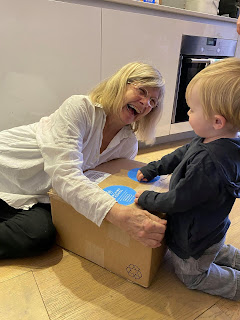

"Come now myself to the late autumn of my life, I too am hung with its history. Certain parts of my personality remain intractable. I do not see them changing by way of any effort I can make. And when I come to die, I will die with the detritus of my history: the decay of mistakes made, of promises unfulfilled. I see this fact clearly, but with a profound, contented acceptance that in a mysterious way harmoniously contains it."
I am not sure that I have reached this point of acceptance but, from time to time, I feel a loosening of my own expectations to be something other than I am.

As of today, the Coronavirus has attacked 664, 621 people of which 142,368 have recovered. Sadly, 30, 891 have died.
Is it any wonder that I am thinking of death? When I arrived home, not knowing if I had caught the virus en route - two planes, two trains, a taxi and an Uber - I kept thinking that I should treat the two weeks of isolation as if they were my last and only do things that made me feel good and ignore the cobwebs and kitchen floor. So what have I been doing? Amongst other things, vacuuming up cobwebs and scrubbing the kitchen floor.
I feel frozen, scared and curious. How is the Covid-19 going to play out?
I have also been reading a lot of trashy novels and one good book - "Turn: The Journal of an Artist" by Anne Truitt in which she explores her day to day life as a woman, artist, and mother while at the same time recognizing that she is aging and that her life is approaching an end.
I wish I had noted more passages that hit me in the gut and perhaps I'll re-read it but for now I am caught up in her relationship with her children and grandchildren.
"The most painful fact that I have to grasp is that parental protection is an impossibility. It is also counterproductive. I cannot in honesty wish to deprive my children of the particular knowledge they can garner only from making their own decisions, and their own mistakes. No matter how much I love my children, I can merely continue to keep them company in their lives. And we all occasionally feel the chill breath of our inevitable separation by way of death."


"Come now myself to the late autumn of my life, I too am hung with its history. Certain parts of my personality remain intractable. I do not see them changing by way of any effort I can make. And when I come to die, I will die with the detritus of my history: the decay of mistakes made, of promises unfulfilled. I see this fact clearly, but with a profound, contented acceptance that in a mysterious way harmoniously contains it."
I am not sure that I have reached this point of acceptance but, from time to time, I feel a loosening of my own expectations to be something other than I am.
Subscribe to:
Posts (Atom)